Latest Post

The Grease Fire Spreads [UPDATED]

First HHS "suspended" enrollment into PCIP because of insufficient funding. Now comes word that HHS will be cutting payments to providers who treat those in PCIP. From the New York Times:

Under a new policy issued by Kathleen Sebelius, the secretary of health and human services, “health care facilities and providers will get paid less” for providing the same services to patients in the federal program, known as the Pre-Existing Condition Insurance Plan.
The article further stated:
Federal health officials said the alternatives were worse. If the program runs out of money, they said, some sick people will lose access to health care, and others will be unable to pay for the treatments they receive, forcing doctors and hospitals to write off large amounts of “uncompensated care.”  
In a regulation to be published Wednesday in the Federal Register, the administration says that doctors and hospitals must accept the amounts set by the government as “payment in full” for services in the high-risk pool administered by the federal government. 
On a related note, Ms. Shecantbeserious was busy touting the law in Europe. She "characterized the Affordable Care Act as part of a global movement toward better health through government-led reform."

Based on her words, one would guess that Government will need to seek additional funds (taxes?) while also cutting payments for health services (rationing?) Yep. This is our future under Obamacare.

UPDATE [HGS]: And some breaking news this afternoon on the PCIP front:

"Eighteen states have decided to turn their state Pre-existing Condition Insurance Plan (PCIP) programs over to [HHS Secretary Shecantbeserious]."

As Patrick notes above, the reduced payment scheme is going to really hurt prospective providers, and hence any patients that might want to be treated. But let it never be said that Madame Secretary's minions lack a sense of humor:

"These actions will help ensure the program's smooth transition to 2014"

Droll.
 

On the Oregon ObamaTrail

Well, some good news for Beaver State residents who may be shopping for health insurance this fall. Unlike so many other states, carriers seem to be supportive of Oregon's Exchange:

"The Oregon Insurance Division has posted individual and small-group rate proposals for 2014 ... rate proposals from a total of 16 conventional carriers and two new CO-OP plans for the exchange and non-exchange markets."

Oregon is one of the minority of states that has chosen to implement its own Exchange, rather than rely on Ms Shecantbeserious and her minions to do so on its behalf. Noticeably absent from the list of participating carriers are Blue Cross and United Healthcare, two rather large elephants in the room. They've chosen to cast their lot with the non-Exchange market, instead.

Interesting developments.
 

Just 12 Easy Payments

Need Obamacare insurance? No problem. Click or call the exchange in your state using your Obama-phone. Complete the 20+ page Obama-application for financial assistance. Once approved you pick an Obama-plan and then in just 12 easy payments you will be the proud owner of your new Obamacare health insurance plan.

But wait.

Paying for it (even after financial assistance) may be a challenge for some.
For ordinary Americans deemed unbankable, those who don’t have a traditional checking or savings account, it can be hard to simply pay bills. And that is about to become a big problem for those who also lack health coverage -- and for the health insurance companies trying to sell them coverage. After all, how do you sell a product to a customer who has no way to pay you?
KHN

Money order? 

This is a problem for about 20% of the population. Wonder if the folks at HHS thought about this?

Nah.
The new federal health law which requires most Americans to carry health insurance starting in January presents a particular problem for those households, since most health plans accept a credit card for the first month’s premium payment and then require customers to pay monthly with a check or an electronic funds transfer from a checking account.
The solution is simple.

REQUIRE everyone to have a credit card and a bank account.

Or REQUIRE the insurance carriers to accept EBT cards.

Buy here. Pay here.

No problem.


Unexpected Insurance Headlines


Help Wanted

We've already noted that carriers seem to be actively avoiding the Exchanges due to go online in the next few months. Of course, that's for the individual market - the small group market must be doing gangbusters, though, right?

Right?

Turns out, maybe not:

"The California Health Benefit Exchange has put out a call for general agents ...  to recruit, train, supervise and support the retail agents that help the small employers that sign up for the state's Small Business Health Options Program (SHOP) exchange plans."

But why should they?

All along, agents have been told, at least implicitly, that their services aren't necessary (cf: Navigators). Agents must undergo fairly extensive scrutiny and training, and must continually update their professional education. All of which comes at a cost, in time and in money. Of course, the folks in Sacramento understand the value of the agent in the process, and are willing to pay for the very best.

No, I didn't think you'd fall for it:

"Exchange managers want general agents to keep estimates for total costs under $3 million"

Really, and just how many groups do they think will sign up?
 

Small Businesses are Exempt from PPACA?

A couple of weeks ago The Hill reported that 48% of small business owners believe that PPACA will hurt their business. In the article there is a quote from President Obama about the impact this will have on small business. He said: "Some small businesses are being told their costs are going to go up, even though they're exempted from the law" or stand to benefit from it.

I am a small business owner working within a large insurance agency. I have two employees and I provide benefits including medical insurance. Under our arrangement I currently pay 100% of the premiums. I have been able to do so because we are a healthy low risk and because my employees understand the value of the benefit and know that it is part of the overall compensation package.

I strongly object to the notion that I am exempted from the law. It is true I can drop coverage and not pay a penalty. But that would put my employees into exchanges where every dollar they have to spend in premiums is more than what they currently pay. My key employee, based on family income, wouldn't qualify for a subsidy. She (52) and her spouse (53/smoker) would be looking at a $15,000 pay cut. For this key employee I currently pay around $8,700 a year. Even if I gave her a raise by that amount it still costs her a ton of money out of pocket.

We will also see our premiums go up. Our insurance company has informed us that because of community rating we are looking at an increase of 50% or more. On top of this factor we also will pay a PCORI fee, a reinsurance fee, a risk adjustment fee, and a market share fee. In total these fees will represent roughly a 3% increase. Add to that we now must provide an array of additional benefits without limitations that we don't use nor need. Last, they will also charge us more because our industry code is a low risk one.  In total my guess is the costs will rise by close to 75%.

My premium increases are going to make it unaffordable to remain in business and dropping coverage simply shifts an enormous burden onto the people who help the business be successful. So, my question to President Obama and HHS is please explain how my business stands to benefit from PPACA?
 

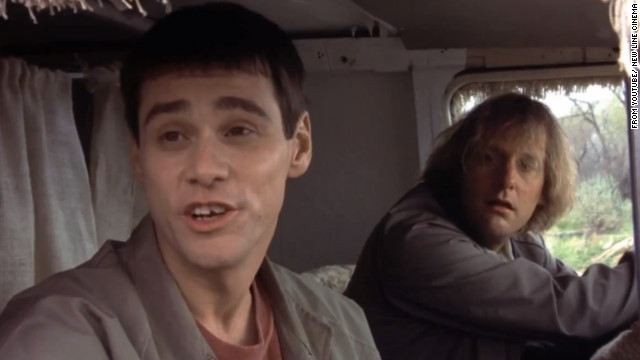
Dumber and Dumberer

As the Exchange Countdown Clock slowly - inexorably - winds down, our attention turns to the eternal question: "what's next?"

Ostensibly, folks who plan on buying their new health insurance from one of the public Exchanges will turn to one of those new-fangled "Navigators" for help. After all, these folks are new to the insurance purchasing process, and need highly trained folks brimming with integrity and advanced insurance knowledge.

Or maybe not:

"At a private briefing with federal officials last month, committee aides say they were told there would be no criminal background checks for navigators or requirements that they hold a high-school diploma"

Contrast this to actual licensed insurance agents. Here in Ohio (and I imagine these requirements are fairly universal across the other 57 states) one must have (at least) a high school diploma (or equivalent), take 40 hours of pre-licensing training, pass a rigorous licensing exam with a minimum of 70% correct answer, and complete over 20 hours of Continuing Education every two years.

Now who would you trust with your financial and personal information, let alone to help guide you to an informed purchasing decision?

Yeah, thought so.
 
 
Support : Creating Website | Johny Template | Mas Template
Copyright © 2011. The Insurance Blog - All Rights Reserved
Template Created by Creating Website Published by Mas Template
Proudly powered by Blogger