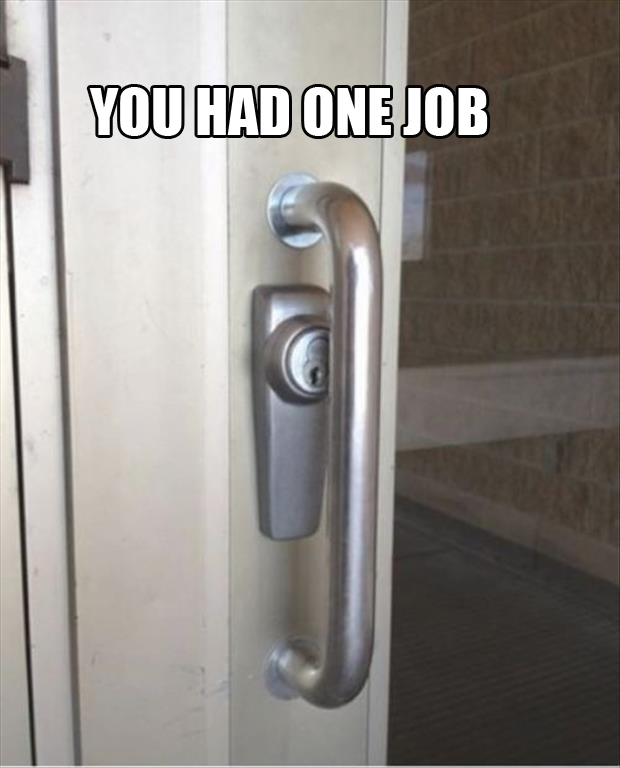
Much like doctors and lawyers carry malpractice insurance, licensed insurance agents carry Errors and Omissions (E&O) coverage. This type of liability policy protects policyholders (clients) if/when the agent screws up, causing financial loss.
Now come the Navigators. In addition to having to pass no background checks or graduate high school, these folks will also not be required to carry any kind of E&O coverage. Which is actually a good thing (from their perspective) because it's not clear that such coverage would actually be available to them even if they wanted it.
Professional liability insurance (including E&O) requires certain things to be true. In the case of E&O, one must be licensed to sell insurance. Okay, Henry, what about someone who isn't licensed, but needs this kind of coverage, such as an IT professional? There's no Ohio Bureau of Geek Licensing, but these folks would be eligible to purchase Professional Liability insurance due to training and expertise.
Navigators may be neither licensed nor certified, heck, they don't even need a high school education to qualify; they'll simply attend 20 to 30 hours of instruction and be sent out the door, where they'll spread their, um, "expertise" to unsuspectingvictims "clients." But what happens if/when they screw up? What financial recourse will their "clients" have? Their homeowner's policy (if any) won't cover them because it's business, and it's unlikely that they're independently wealthy (deep pockets).
Where's the consumer's protection?
Co-blogger Patrick pointed me to this article, which reports that Navigators in the Hawkeye State will be required to purchase surety bonds. The problem is that a surety bond is not the same as professional liability; it essentially covers theft of money.
For example, a Navigator tells a "client" that coverage will definitely be in force the next day. Three days later, the "client" has a heart attack and runs up tens of thousands of dollars in hospital bills, only to find out that coverage was not, in fact, in force. The most that "client" can recover from the Navigator is whatever he paid the Navigator for his services, not the huge hospital bills he now owes.
This would be where professional liability (E&O) insurance would come into play had a licensed agent been involved. From the article, it appears that Iowa Navigators must be licensed, so they may, in fact, be eligible for E&O coverage. But this is not the case in all 58 states; and therein lies the rub. Having spoken with two actual experts in this area, neither could think of a carrier that would write this coverage.
Which is not to say that it couldn't be developed, should the marketplace demand it. The problems inherent in underwriting such a plan, though, seem pretty insurmountable. And how would one price this in a competitive way? It's unlikely that most of the Navigators are going to be clearing $96-large; more likely, this will be another part-time job to help ends meet. So how do they afford even a minimum premium (generally hundreds - if not thousands - of dollars a year)?
Yeah, that's what I thought, too.
[Huge IB Thanks to P&C Gurus Teresa S and Bill M for helping me noodle through this post]
Now come the Navigators. In addition to having to pass no background checks or graduate high school, these folks will also not be required to carry any kind of E&O coverage. Which is actually a good thing (from their perspective) because it's not clear that such coverage would actually be available to them even if they wanted it.
Professional liability insurance (including E&O) requires certain things to be true. In the case of E&O, one must be licensed to sell insurance. Okay, Henry, what about someone who isn't licensed, but needs this kind of coverage, such as an IT professional? There's no Ohio Bureau of Geek Licensing, but these folks would be eligible to purchase Professional Liability insurance due to training and expertise.
Navigators may be neither licensed nor certified, heck, they don't even need a high school education to qualify; they'll simply attend 20 to 30 hours of instruction and be sent out the door, where they'll spread their, um, "expertise" to unsuspecting
Where's the consumer's protection?
Co-blogger Patrick pointed me to this article, which reports that Navigators in the Hawkeye State will be required to purchase surety bonds. The problem is that a surety bond is not the same as professional liability; it essentially covers theft of money.
For example, a Navigator tells a "client" that coverage will definitely be in force the next day. Three days later, the "client" has a heart attack and runs up tens of thousands of dollars in hospital bills, only to find out that coverage was not, in fact, in force. The most that "client" can recover from the Navigator is whatever he paid the Navigator for his services, not the huge hospital bills he now owes.
This would be where professional liability (E&O) insurance would come into play had a licensed agent been involved. From the article, it appears that Iowa Navigators must be licensed, so they may, in fact, be eligible for E&O coverage. But this is not the case in all 58 states; and therein lies the rub. Having spoken with two actual experts in this area, neither could think of a carrier that would write this coverage.
Which is not to say that it couldn't be developed, should the marketplace demand it. The problems inherent in underwriting such a plan, though, seem pretty insurmountable. And how would one price this in a competitive way? It's unlikely that most of the Navigators are going to be clearing $96-large; more likely, this will be another part-time job to help ends meet. So how do they afford even a minimum premium (generally hundreds - if not thousands - of dollars a year)?
Yeah, that's what I thought, too.
[Huge IB Thanks to P&C Gurus Teresa S and Bill M for helping me noodle through this post]